Aparna Rao, the brilliant Bangalore-based artist and TED Fellow, is known for her playful and innovative high-tech art installations. She collaborates with Soren Pors, blending technology with humor to create interactive elements that captivate and amuse.
I first met Aparna at TED Global in Edinburgh around 2012/13, and we’ve stayed in touch since. It’s been amazing to watch her artistic journey and see her grow over the years.
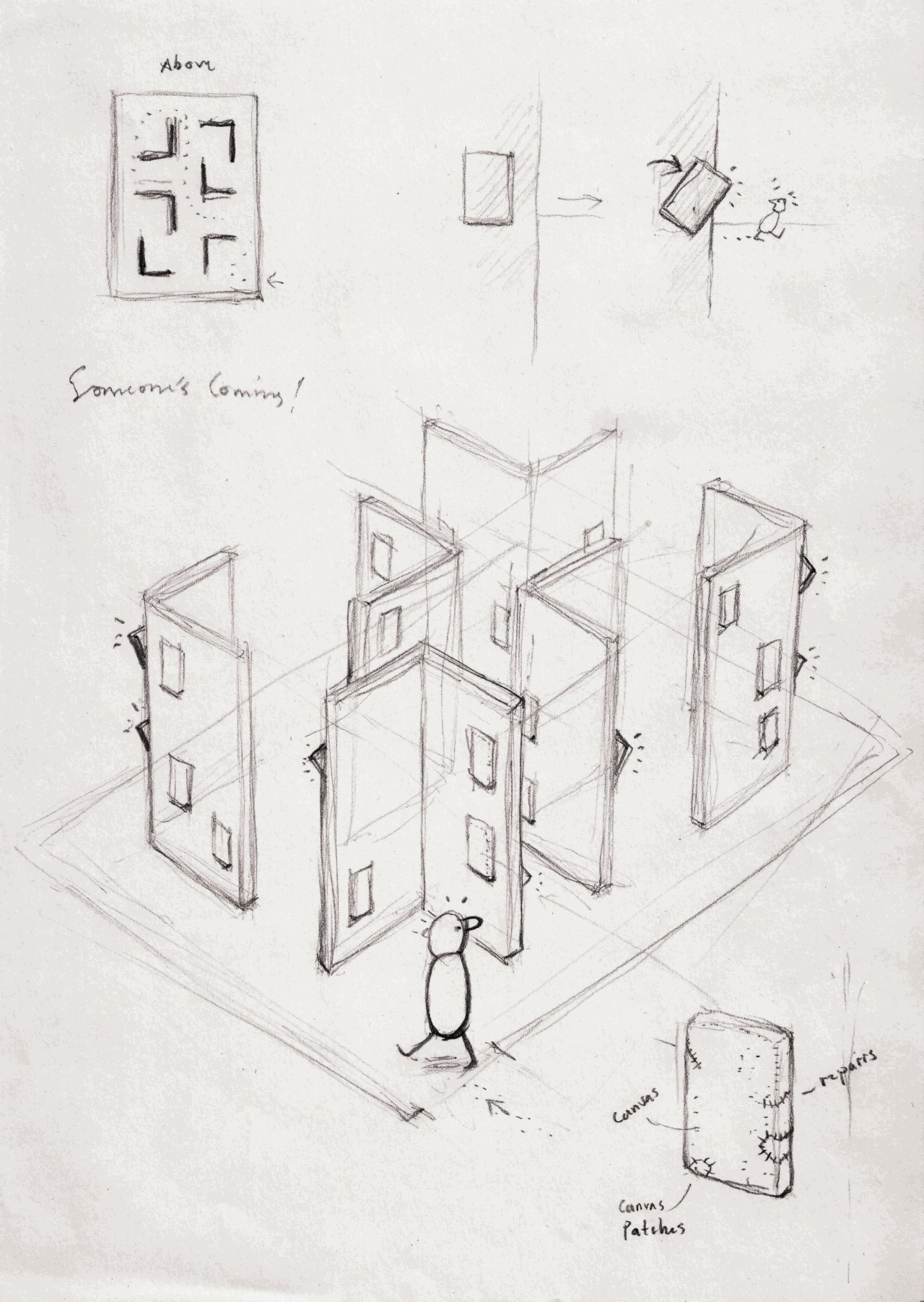
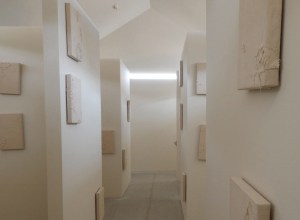
One of my favorite pieces by Pors & Rao is “Someone’s Coming,” which they presented at the Setouchi Triennale in 2016. Imagine a maze-like gallery with blank canvases that peek around corners as you enter. It creates this sense of restlessness and anticipation, playing with themes of human behavior, emotions, and relational dynamics. It’s playful yet deeply introspective.

After Aparna shared the installation link with me, I couldn’t help but view it through my Vedanta lens. I saw an opportunity to reinterpret this installation to explain the concept of Pratibimbavada. In my version, mirrors would replace canvases to explore the idea that the self (Atman) is a reflection of the ultimate reality (Brahman).
Here’s my vision: As you walk through the space, a series of mirrors would respond to your presence. Like Rao’s original canvases, these mirrors would stay still when directly faced, symbolizing that the self cannot be objectified.
The mirrors would start off very cloudy and gradually become clearer as you progress along a specified path. This represents the journey of self-realization, where ignorance (Avidya) is gradually removed to reveal the true nature of the self. The second-to-last mirror would be the clearest, allowing you to see yourself clearly and recognize the self as a reflection of Brahman.
The final mirror, however, would be a trick mirror—super clear but not reflecting your image at all. This signifies the ultimate realization that the self and Brahman are one and that Brahman, being formless and attribute-less, cannot be captured or objectified.
This reimagined installation would aim to show our tendency to objectify the self while emphasizing that the true self is the subject and cannot be objectified. The journey through the mirrors represents the gradual removal of ignorance, leading to the realization of the non-dual nature of reality. The final mirror serves as a powerful metaphor for the ultimate understanding that Brahman is beyond all forms and attributes.
 Hari Vadlamani