If you haven’t watched Christopher Nolan’s “Memento,” I suggest you skip whatever you are doing and watch it immediately. You may have heard of Desi inspirations from this movie (like “Ghajini”), but apart from the concept of short-term memory loss, there is absolutely nothing in common with the original.
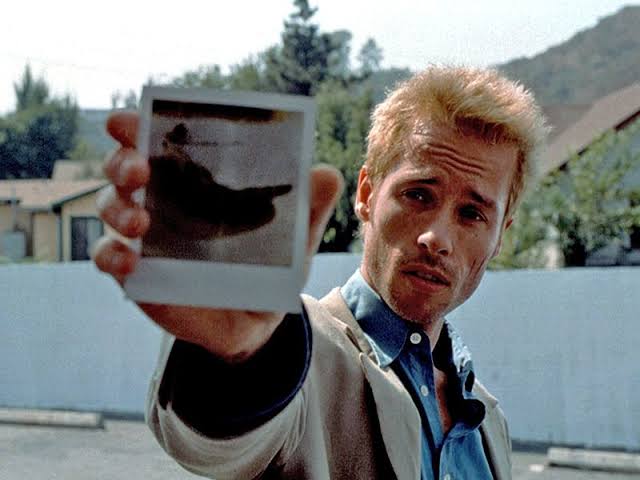
The narrative structure of Memento is one of the most original in the entire history of films. The movie is about a protagonist who suffers from anterograde amnesia, meaning he is unable to form new memories. The story is simultaneously told in two tracks—backwards and forwards: a black-and-white track that proceeds forward in chronological order, and a color track that tells the story in reverse. The two tracks “meet” in the climax, making it a complete story about a hero who is on a quest to find his wife’s murderer, using notes, photographs, and tattoos to compensate for his memory loss.
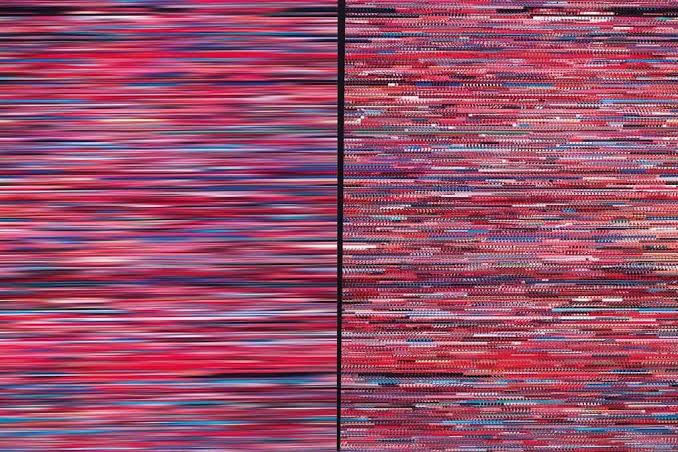
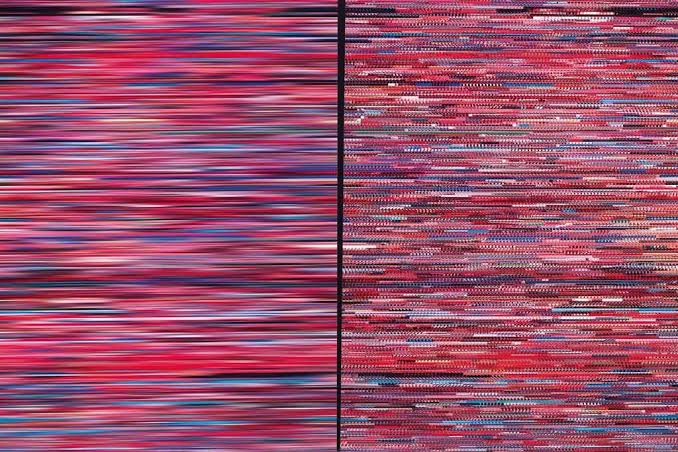
Wang Guofeng is an artist from Beijing, China. I was introduced to his work at Art Stage Singapore in 2014. His “Memory” series consists of large panels filled with blurred and streaky lines. Upon closer examination, you realize each blurred line is actually a print of a film, captured frame by frame. This presentation allows viewers to observe the progression of the story scene by scene, similar to a visual storyboard. Wang believes that memories are subjective and selective. Through his series, he questions whether human experiences and their recollection of history are reliable. He believes they are not, suggesting that memory lapses are a normal part of being human, which makes our history abstract, vague, or overly beautified over time. He seeks to convey through his works that history is unreliable and that we are destined to repeat the mistakes of the past again and again.
In Advaita Vedanta, the snake and rope analogy is used to explain the concept of Maya. In a dimly lit environment, a person mistakes a rope for a snake and subsequently in daylight realizes it to be a rope. In other words, he recalls the attributes of a snake from his memory and imposes them on the rope. The analogy is used to explain that due to Maya, we take our body and the world to be real, and once we have the knowledge or the light, or the correct understanding of the ultimate reality, the illusion that the world is real will disappear.
I like art that has a deeper philosophical basis, and I generally tend to overlay my own Vedantic concepts onto an artwork. Such constructs may not have been considered by the artist himself. Through such layering, I make the art my own.
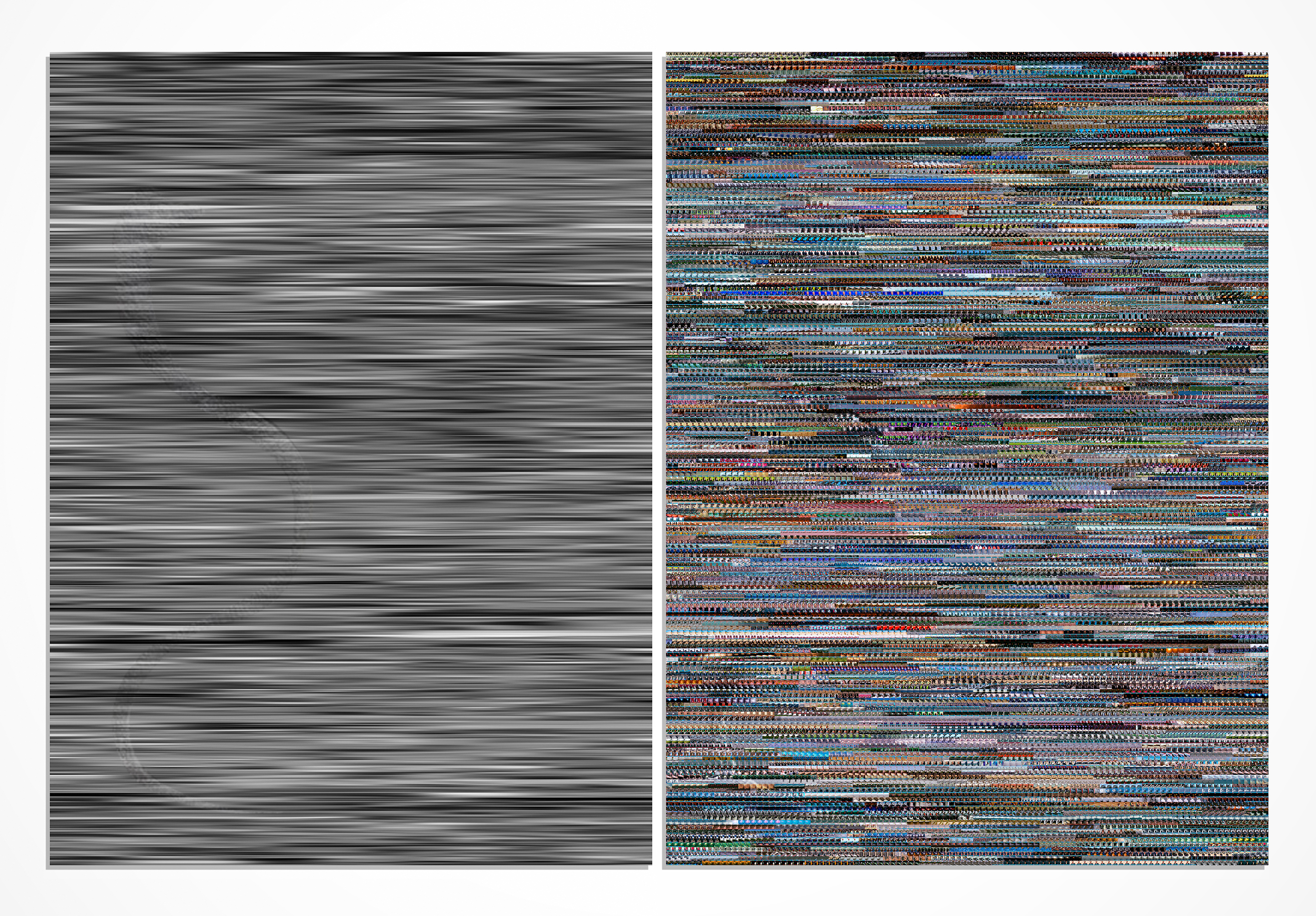
I sauntered around the exhibit for some more time, but I was pulled back to spend more time with Wang’s work. I remembered “Memento,” which dealt with memory and the above analogy from Advaita, and suddenly saw two panels. One black and white and one color. The panels would have frame-by-frame images of the movie. The black-and-white panel would have the section that moves forward, and the color panel would have the section that moves backward. By playing with light and printing it darker or lighter in certain areas, I would have a subtle image of a rope on one panel and a snake on the other. Essentially, it would be a multi-layered artwork on memory, using Wang’s works.
Excited, I took the address of the artist and reached out to him. My nephew was living in Shanghai at that time, and I requested him to visit the artist in Beijing. Wang then Skyped with me, and I explained the concept to him. He was happy to do this customized work for me. I asked him for two versions, as I wanted to gift one to Christopher Nolan.
While Wang was keen on exploring this theme, the gallery that represented him was not very keen on such customized work. My curator friend also advised me that since this work is not a part of his usual body of work, it would not have any resale value and therefore would have to be priced differently from his usual works. The gallery did not yield on that. I also did not have access to the rights to use the frame-by-frame images of the movie “Memento”. Eventually, I had to drop the idea.
Below is a Photoshop done to explain the concept I had in mind. You can see very subtle images of the snake and the rope.
Writing this now to capture the memory of a memento on memories to Nolan that did not materialise and remained illusory.
 Hari Vadlamani